Most lift chairs that disappoint were bought from a photo. The chair works fine. It just doesn't fit the person sitting in it — the seat is too wide, the footrest lands wrong, the lift feels abrupt. So before anything else, here is the one rule: a lift chair is bought for a person, not a room. Fit the person and the rest follows.
What is the difference between a 3-position and an infinite-position lift chair?
A 3-position chair does three things with one motor: lifts you to standing, sits upright, and reclines partway for napping. Simpler, and less expensive.
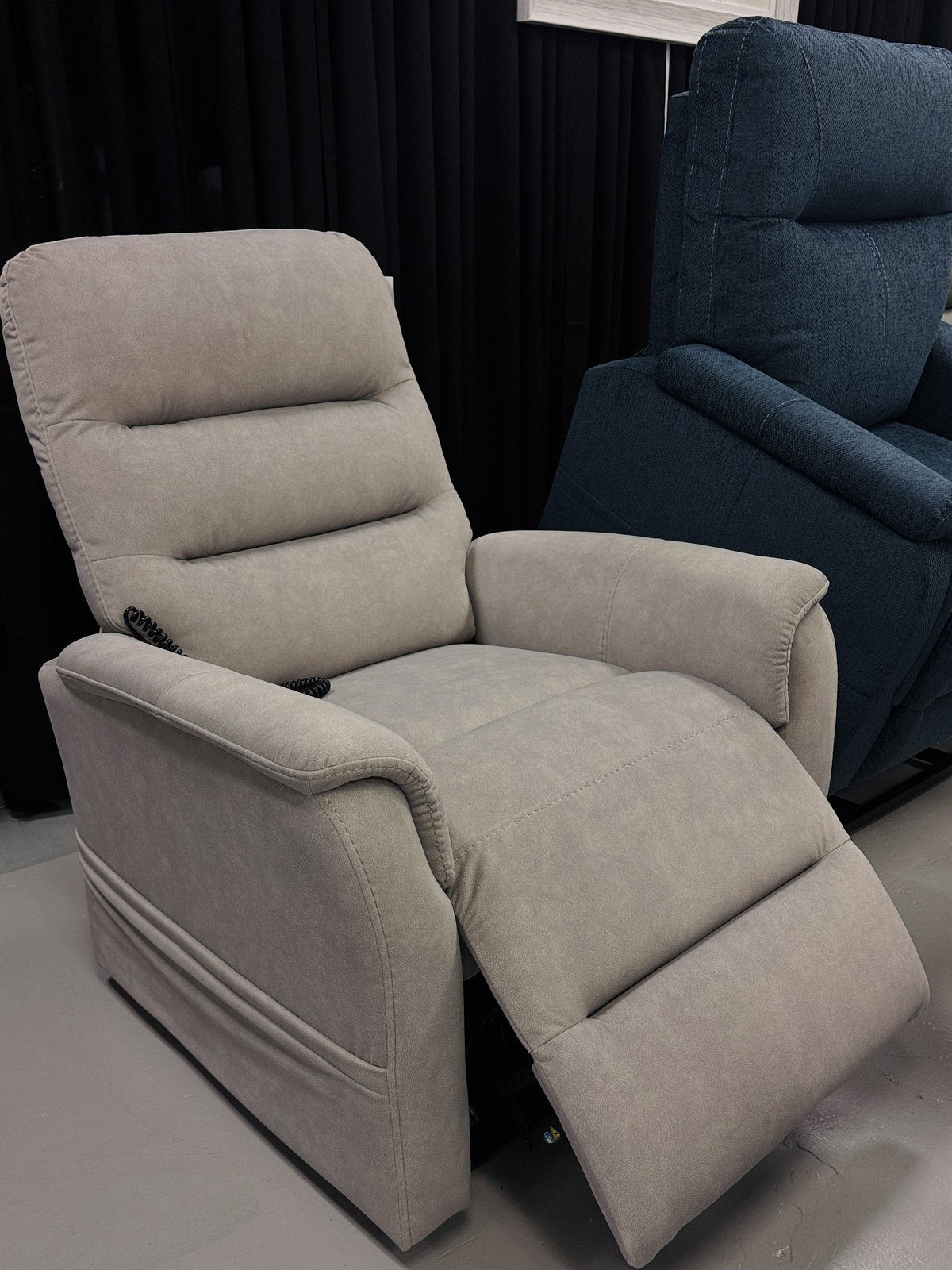
An infinite-position chair uses two motors, so the backrest and footrest move independently. That gets you a nearly flat position for sleeping, a zero-gravity-style position that takes pressure off the lower back, and everything between. If someone will spend hours a day in the chair — and many people do — the second motor is usually worth it.
On the Mega Motion line we carry, several models add heat and massage, and the top models add a power headrest and lumbar. Every one of them has a battery backup, so a power outage never traps anyone in the chair. That detail matters more than people think.
What size lift chair do I need?
Three numbers, matched to the person:
Seat width. Across the line these run about 20 to 26 inches. Too narrow is uncomfortable; too wide and the armrests are useless for pushing up.
Seat height. Feet should rest flat on the floor when seated. Each model publishes a suggested user height range — an honest spec worth reading.
Weight capacity. 375 pounds on standard builds, 500 on the heavy-duty model, which also synchronizes its two lift motors to prevent side tipping.
If you can, bring the person to the showroom. If you can't, bring their measurements and we'll match the specs. Twenty minutes, done properly, and the chair gets used every day for years.
Will Medicare pay for a lift chair?
Here is the honest version, because there's a lot of wishful thinking online. Medicare Part B covers only the seat-lift mechanism — the motor assembly that raises the seat — and only when a doctor certifies medical necessity on form CMS-849. That allowance is roughly three hundred dollars depending on region, paid at 80 percent after your deductible. The chair itself — frame, upholstery, heat, massage — is not covered, ever.
So the realistic way to think about it: Medicare may take a modest amount off, if the doctor's paperwork supports it. It does not buy the chair. Anyone who tells you otherwise is selling something.
What happens if the fit is wrong anyway?
At our store, every lift chair carries our Right-Fit Promise: when we do the fit consult before purchase and the fit still turns out wrong within 14 days, the first exchange is on us. And we service what we sell — the chairs carry a two-year manufacturer warranty on parts and service, and if a motor or mechanism fails under warranty, you call us and we coordinate the repair. No factory 800-number runaround.
The lift chairs are on the floor now at our Melbourne showroom — twenty-two models, most in Florida warehouse stock, with free white-glove delivery and setup within 60 miles. Start with the lift chair guide page, browse every model we carry, or just come sit down and stand up a few times. That's the whole test.
Eric